
Her Newsletter Knows Her Garden Zone
A retired teacher swapped a shelf of gardening books and three weather apps for two personalized newsletters. Now her mornings start with her zone, her pollen count, and one great word.
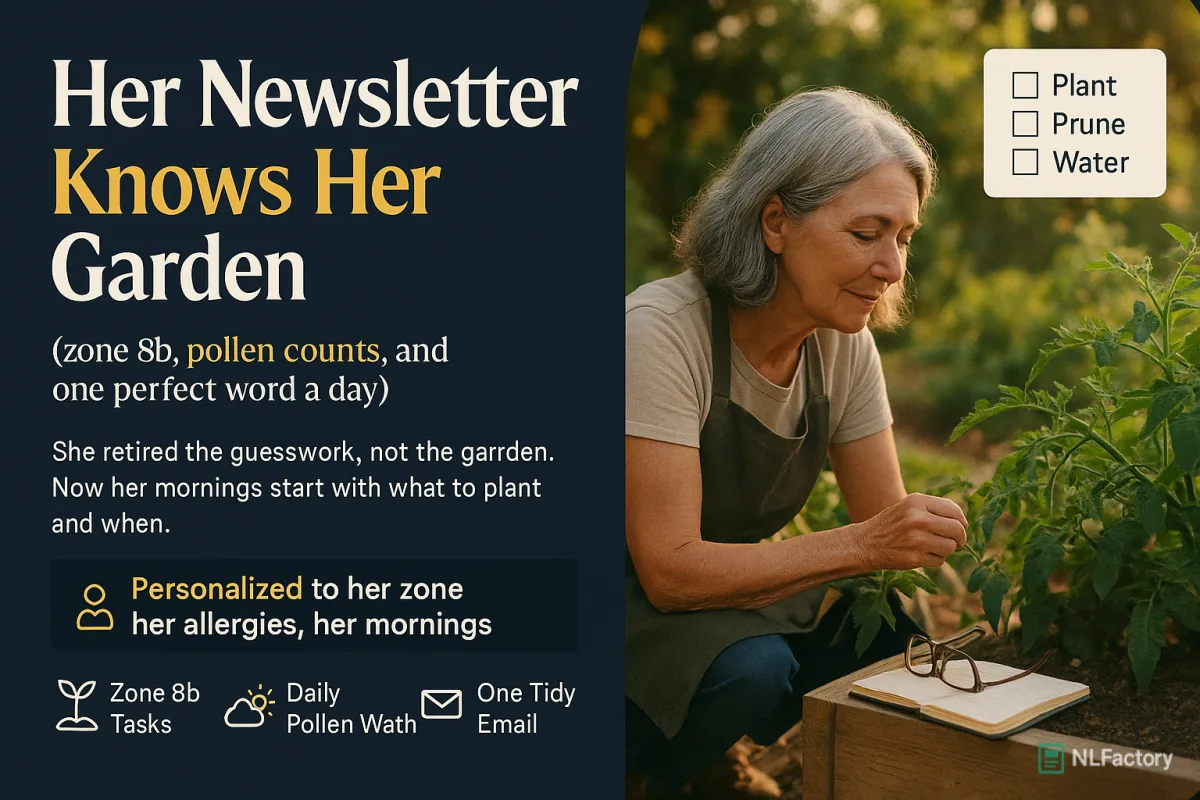
I want to tell you about someone like Ruth. She taught middle school science for thirty-one years, retired two springs ago, and promptly declared war on her backyard. Four raised beds, a fig tree of questionable ambition, and a running feud with the squirrels. The garden was the plan. Keeping up with the garden was the problem.
Gardening advice is everywhere and almost none of it is for you. The blogs assume you live three growing zones away. The apps send alerts for a city two hours south. Ruth kept a stack of index cards on the counter with planting dates copied from four different websites, and she still lost a bed of lettuce to a frost the internet promised was two weeks out.
What she tried first
First came the books, which were lovely and general. Then three weather apps, each with a different opinion about tomorrow. Then a gardening forum where every question got nine answers and a small argument. She even tried a spreadsheet, which worked exactly as long as she remembered to open it.
None of it failed loudly. It just added up to a hobby that felt like homework before she got her gloves on.
How she uses NLFactory now
Ruth set up two of the ready-made newsletters and typed in one thing the apps never asked for: her garden zone, 8b. The Garden Planner arrives each morning with a task that actually matches her dirt, her season, and her corner of the map. Prune this. Start these seeds indoors. Wait on that.
The Pollen Watch comes with it, because Ruth garden-sneezes like it is a competitive sport. On high-count mornings she moves her outside hour to the evening and does the indoor work first. Small change, better week.
And because retired teachers never fully retire, she added Word of the Day. She reads it with coffee and tries the word out on her husband before lunch. He pretends to mind.
The whole routine is one email account and about six minutes. No tabs, no index cards, and nothing to remember to open. That is the quiet advantage of a newsletter built around your details instead of everyone else's.
The outcome
A season in, the results look like what you would expect from advice that finally fits: no more zone-wrong planting dates, a lettuce bed that survived spring, and roughly an hour a week that used to go to cross-checking websites now going to the actual garden. The index cards retired before she did the math on them.
Her sneezing did not stop. She just stopped being surprised by it.
What a garden teaches about information
The lesson I keep coming back to with Ruth is that generic information creates work, and personal information removes it. The internet knows everything about gardening and nothing about her garden. One newsletter that knows her zone beats fifty websites that do not.
Whatever your version of the garden is, a topic, a town, a team, the fix is the same: stop adapting yourself to general-purpose feeds and let the information arrive already shaped to your life.
This is an illustrative scenario: a composite, not a customer story. Names and details are invented to show how NLFactory fits real routines.
Quick answers
How can I get gardening advice that actually matches my location and growing zone?
You can use a newsletter service like NLFactory that lets you input your specific garden zone. Ruth entered her zone 8b and receives daily tasks tailored to her exact location and season, rather than generic advice from websites that assume you live somewhere else entirely.
What problem does personalized gardening information solve?
Generic gardening information creates extra work because you have to adapt it to your situation. Ruth used to cross-check four websites and keep index cards of planting dates. With a personalized newsletter matching her zone, she eliminated that research time and gained roughly an hour per week to spend actually gardening instead.
Can a newsletter help with seasonal allergies while gardening?
Yes. Ruth uses a Pollen Watch newsletter that alerts her to high pollen count days. On those mornings, she moves her outdoor gardening to the evening and does indoor tasks first, which helps her manage her allergies and plan her gardening schedule more effectively.
Want a newsletter like this?
NLFactory turns any topic into a polished, AI-curated newsletter delivered on your schedule.
Start free →